Introduction
Today, the iGaming industry is facing a clear shift. A standard mix of games and betting options is no longer enough to retain users. Players are looking for a social layer: real interaction, competition, and a sense of belonging, not just the chance to win money. As a result, gambling is no longer a solitary activity. It becomes an emotionally engaging experience that connects players to each other and to the platform. Social gameplay and gamification have emerged as key drivers of loyalty and LTV across online casinos, sportsbooks, and white-label platforms worldwide.
Why players seek social experience, not just betting
Players are not just bettors chasing winnings. They are also people looking for entertainment and interaction. Modern platforms are adapting by introducing real-time features and social mechanics. Live chats with dealers and other players, tournaments, leaderboards, and shared events create an experience closer to Twitch or TikTok, turning gameplay into part of a lifestyle.
- Real interaction and sense of belonging. Many players want to feel part of a group or a team, to share emotions and receive feedback. This adds spontaneity and a human element that purely mechanical gameplay lacks. Features like live hosts, personal messages in chat, and emoji reactions extend session duration. Live casino games with chat increase session length by around 19%. Players feel acknowledged. They value when a dealer remembers their nickname and engages with them.
- Competition and status. The drive to compete and gain recognition is universal. Mechanics that reflect social hierarchy are highly engaging. Leaderboards, tournaments, and ranks satisfy the need to outperform others and hold status within a group. Earning a badge or reaching the top creates a sense of pride and motivates continued play.
- Entertainment and emotions. Many users treat online casinos as a form of leisure rather than a way to earn money. Shared laughter, discussion of wins, friendly banter all make sessions more memorable. Operators actively build communities on Reddit, Telegram, and Discord where players exchange strategies, celebrate wins, and go through highs and lows together. This peer-to-peer content builds trust, since users trust each other more than advertising, and creates another reason to return: communication.
In the end, social features deliver something algorithms alone cannot provide: human interaction. In an environment increasingly shaped by automation and chatbots, players value authenticity and uniqueness. For operators, this creates an opportunity to build a “club-like” atmosphere where users return not just to play, but to belong.
Key social mechanics in iGaming
An effective social strategy is built on combining multiple mechanics, each engaging players in a different way. Below are the core elements of gamification and social gameplay that B2C casinos and sportsbooks use today to retain their audience:
| Mechanics | Effects on players and businesses |
| Tournaments and leaderboards | +54% 90-day retention (gamified vs non-gamified segment) Higher LTV and session frequency driven by competitive incentives |
| Missions and challenges | +32% weekly retention (7-day betting streak) Sportsbook margin ×2.25 (parlay challenges) Sense of achievement, formation of daily habits |
| Loyalty systems and levels | +22% active players (30-day) after introducing VIP tiers Repeat deposits +19% (Bet&Get missions) |
| Integrated chat and live features | Session duration +18–27% (chat vs no chat) Live games with chat: +19% session length Community extends engagement through emotions and support |
| Clans and teams | +20–30% engagement (DAU) after launch Additional motivation through team goals and inter-group competition |
Tournaments and competitions
Tournaments are a proven engagement tool that turns standard gameplay into competition. Players compete with each other, not just the operator, which increases involvement.
Mechanics: regular competitions are held daily, weekly, or tied to specific events, with leaderboards and prize pools. For example, slot tournaments: within a fixed time, players spin, accumulate points based on wins or bets, and rank accordingly. At the end, top players receive rewards such as cash, bonuses, or valuable virtual prizes.
Behavioral effect: competition activates both the drive to win and FOMO. Limited time pushes players to engage more actively, while public recognition, seeing your nickname in the rankings, creates a sense of achievement. Importantly, players compete against each other rather than the operator, which feels more like a sporting contest. Tournaments are especially effective on weekends and holidays, as short competitive “sprints” boost engagement without requiring higher stakes.
Implementation insights: success depends on transparency and solid infrastructure. The interface must display real-time leaderboards, countdown timers, and ensure rewards are credited automatically immediately after completion, which builds trust. Segmentation is critical. A single global leaderboard discourages around 95% of players if top positions are dominated by high rollers. The solution is to divide tournaments into tiers or leagues such as bronze, silver, and gold, giving each player a fair competitive group. Prize structures should also be broad, rewarding top 100 rather than winner-takes-all, so more participants experience success.
Example: providers report that after introducing slot tournaments, operators saw increased LTV and stronger engagement with new games, as tournaments were used to promote fresh content. Delasport reports that parlay-based mission tournaments increased sportsbook margin by 2.25×, as players deliberately chose higher-risk bets for rewards. Daily challenge series increased weekly retention by 32%, turning occasional bettors into consistent users.
Missions, quests, and achievements
Missions, or challenges, introduce structured task systems inspired by video games. Players complete defined objectives and receive rewards. Examples include completing 100 spins in a week, betting $50 on Champions League matches, or winning three roulette rounds in a row. Rewards can include free spins, free bets, bonus points, or exclusive badges and trophies.
Why it works: missions provide clear short-term goals, something often missing in casino gameplay. Progress bars and checklists trigger completion bias, pushing users to reach 100%. Immediate rewards reinforce behavior through a sense of achievement and dopamine response. When missions refresh daily or weekly, they build a habit of регуляр engagement. Challenges transform isolated bets into a connected gamified experience with narrative progression and reward collection.
Business impact: well-designed missions increase both depth and frequency of play. For example, a “Parlay of the Day” mission increased average odds and margin by 2.25×, as players opted for more complex bets. A 7-day betting marathon increased retention by 32%, converting one-time bettors into repeat users. In online casinos, daily missions increase DAU, as users return to complete tasks and often continue playing afterward.
Best practices: missions should be varied and segmented. Beginners receive simple onboarding tasks such as trying different games, while high-value players receive more complex challenges with larger rewards. Progressive mission chains unlock additional bonuses or narrative elements. Regulatory compliance is essential. Missions must not incentivize excessive or harmful behavior. Balance is critical, as too many or overly aggressive missions can lead to fatigue. The goal is to offer engaging but achievable tasks, while allowing users to disengage without pressure.
Leaderboards and rankings
A leaderboard is a public ranking of top players based on specific metrics such as winnings, points, or activity. Examples include weekly top winners, tournament rankings, or number of bets placed. Sportsbooks may rank prediction accuracy, while social casinos may rank levels or collections.
Social effect: leaderboards directly tap into status motivation. Seeing your position relative to others creates a natural drive to move up. Even without financial rewards, progression feels meaningful. Real-time position changes increase emotional engagement, encouraging players to continue. The desire for revenge or improvement also plays a role, players who fall behind are motivated to return and try again.
Nuances: while leaderboards motivate active players, they can discourage weaker ones. A player ranked last is unlikely to stay engaged. Multi-tier systems solve this by grouping players into leagues and showing only relevant competitors. Personal goals, such as beating one’s own record, also help. Fairness is essential. Anti-fraud systems must ensure rankings are not manipulated by bots or abuse, otherwise trust collapses.
Example: PokerStars introduced league-based rankings where players compete within comparable tiers. Top performers receive status rewards every few months. This significantly improves retention among mid-level users. In DoubleDown social casino, friend-based leaderboards are integrated with Facebook, allowing players to compare results with their social circle, increasing engagement through friendly competition.
In-game chat and communities
Chat is a core element that brings a human layer back into online gaming. It recreates the atmosphere of land-based casinos where players interact at the table. Chats are common in live casinos, poker rooms, bingo, lotteries, and social casino environments.
Why it works: chat reduces isolation, especially for users who spend long sessions in-game. Instead of a static interface, players see a live stream of messages, emojis, and reactions. It enables emotional exchange, players celebrate wins together or support each other after losses. This social validation reduces stress and creates a sense of shared experience. Session duration increases, as players often stay just to interact, even without actively betting. Some users return primarily for the community.
Business impact: an integrated chat improves retention. Operator feedback indicates that an active community increases DAU and drives players back to the platform. In games with a live host and chat, average session length is 19% longer. Players stay because the interaction itself is engaging, not just the game outcome. Chat also enables viral mechanics. Platforms can broadcast big wins to everyone, sparking interest such as “someone just hit it big, I will try too”. They can run quizzes and polls directly in chat during streams.
Challenges: open communication comes with risks. Toxicity is the primary issue. Without moderation, chat can fill with insults, spam, leaked paid tips and similar content. This requires word filters and moderators. Large casinos often employ dedicated chat moderation teams, especially for bingo communities. Fraud is another risk. Chat can be used to promote illegal services or extract personal data from newcomers such as “give me your login, I will help you recover losses”. As a result, regulators sometimes restrict or ban chat on gambling platforms if adequate controls are not in place. Most licensed operators still find ways to moderate effectively, since the benefits of social interaction outweigh the risks. In a competitive market, a platform with communication outperforms a purely transactional environment.
Gifts, virtual currency, and social casinos
The gifting mechanic is one of the most powerful social tools, despite its simplicity. Players can send each other bonuses or items. For example, gifting a friend five free spins, sending a virtual cocktail to an avatar in the casino lobby, or giving an in game token for luck. Social casinos, which are free to play apps with virtual currency, have excelled at this mechanic. Users can send “lucky coins”, lives, energy and similar items to friends every day.
Why it matters: gifting activates reciprocity. When someone receives a gift, they feel an implicit obligation. They log in, claim it, say thanks and return the gesture. This creates social glue between players and drives daily returns. Even if they did not plan to play, they log in to pick up a gift and often stay. Virtual gifts become a form of social currency, especially when premium gifts are available for purchase. Some players willingly buy expensive virtual bouquets or trophies to display generosity and status while pleasing others. This creates an additional monetization channel for operators.
Social casinos such as Slotomania and House of Fun do not pay out real money. They have built entire economies around gifts and virtual currency. They are legal in most jurisdictions because there are no real money winnings, only entertainment. However, users still spend money buying virtual chips to continue playing for enjoyment and social interaction. Grand View Research reports that the social casino market reached 8.5 billion dollars in 2024 and is expected to exceed 14 billion dollars by 2030. This growth is largely driven by social features, daily rewards and gamification that significantly improve retention and ARPU. Players are drawn to the atmosphere of an online club where they can play without risk while still experiencing real interaction and competition. Slot and bingo formats are especially popular because they easily support chat, shared jackpots and gifting.
Example mechanics: in the social casino Bingo Blitz by Playtika, players collect item sets and can trade missing cards with others. This is similar to swapping stickers and encourages interaction. In Slotomania, the Snacks feature allows players to send each other free coins daily, bringing them back into the game. Playtika states that these social mechanics are central to its success, supporting more than 35 million active users and high lifetime value.
Guilds, clans, and cooperative tasks
Grouping players into teams is the next stage of social mechanics. Some casinos and sportsbooks have begun introducing clan systems. Players form groups, complete shared objectives such as reaching one million points as a team in a week, and compete with other groups. This concept comes from MMO games but is gradually being adapted to gambling.
Player value: a guild creates a sense of belonging. You are no longer alone and have your own group on the platform. This fosters collective responsibility. Players think they should not let the team down and log in to complete their part. This leads to stronger attachment. Switching platforms becomes difficult because your clan and earned status do not transfer. Exclusive team based content such as team chat, special tournaments or raids that are unavailable to solo players adds further incentive to stay within the community.
Implementation examples: some modern poker apps allow players to form clubs, invite friends and run private club tournaments. Some casinos already run clan events where players accumulate points together to win team rewards. In the betting segment, social pools are emerging. Groups of friends place predictions on tournament outcomes and compete with each other on accuracy, similar to an internal office pool. These activities increase engagement. According to operator estimates, adding team competitions can improve engagement metrics by 20 to 30 percent. Players log in more often, stay longer and interact more actively with content.
Technical and operational aspects: introducing a clan system requires ongoing live operations support. Teams must design regular events, balance rewards and monitor for collusion such as two teams deliberately losing to benefit one side. The reward is a highly loyal core audience that effectively lives within the product.
Examples of successful products with social mechanics
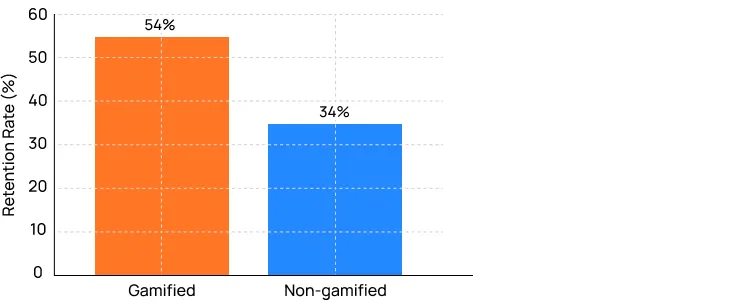
Figure 1: 90 day retention on platforms with gamification elements compared to standard platforms, based on AGCO data from Canada.
Almost all market leaders now implement gamification elements. Several examples illustrate the effectiveness of social features.
- PokerStars, online poker: one of the pioneers of gamification in gambling. Around 2015 to 2016, they introduced Missions, daily poker tasks with rewards, and the Stars Rewards system with chests, levels and a progress bar. The result was a noticeable increase in retention among recreational players. Playing became engaging not only for monetary winnings but also for completing quests and collecting rewards. PokerStars also introduced head to head challenges between friends, interest based clubs and other social features, setting a benchmark for the industry.
- Candy Crush Saga, social casual game: although it is not a real money gambling product, its case is illustrative. Candy Crush is one of the most sticky games in history. Around 66 percent of players remain active for more than three years, and the average player completes about 28 sessions per week. This exceptional retention is driven by social mechanics. Integration with Facebook allows players to track friends’ progress on the level map. Players exchange lives, compete on global and local leaderboards, and participate in regular events and challenges. Many players continue because of the social layer. They do not want to fall behind friends or lose long term progress with rare achievements.
- Online casinos with gamification, overall trend: according to an Ontario market review, 93 licensed sites in 2024 implemented tournaments, achievements and social features. Competition drives this adoption. New products launch monthly with features such as progress bars, narrative quests and competitive modes. As a result, the market has seen retention growth. After 90 days, about 54 percent of players remain on gamified platforms compared to only 32 to 36 percent on traditional sites. This means nearly one and a half times more users are retained thanks to social and gamification features.
Share: